How to Become an IFS Practitioner (With or Without a License)
Sep 18, 2026
This question reaches me from two very different people. One is a licensed therapist who fell in love with the model and wants to practice it properly. The other is a coach, counselor, or helping professional with no clinical license, wondering whether the door is closed entirely. Both deserve a real answer, and the answer has more in common across the two paths than you'd guess — so I've written them together, with the fork clearly marked.
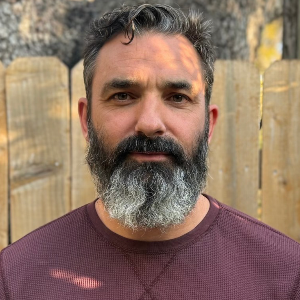
My name is Conor McMillen. I'm an IFS-trained life coach — trained by the IFS Institute in 2014 — and I've practiced IFS daily since, teaching it today to individuals and practitioners through programs that appear below. I have a horse in this race, and I'd rather say so in the second paragraph than let you find out at the bottom. (I am not affiliated with or endorsed by the IFS Institute, and nothing I offer is IFS Institute certification.)
First: which practitioner are you becoming?
Before any training decision, get clear on the lane, because the lane decides everything downstream. To call yourself a therapist you have to have a license — that's a legal line, not a matter of skill or heart. Therapists diagnose and treat mental illness and work clinically with severe trauma. Coaches work with generally-stable people pursuing growth: understanding their parts, unblending, building self-leadership toward their goals. Both lanes are valuable, and part of being trustworthy in either one is knowing where the line sits and referring across it when a client needs the other. I've written more about how the two lanes differ and complement each other.
With the lane named, the path has four steps — and the first two are identical no matter which side of the fork you're on.
Step one: practice on your own system
IFS is the rare modality where your own practice is practitioner development. You cannot lead someone else's system from a part — the calm, curious, and compassionate presence you'll offer a client gets built in your own system first, and every hour with your own protectors is an hour of training. This is where I'd start regardless of license, budget, or ambition: the complete guide to self-led IFS covers the territory, and the Six Fs — the protocol for meeting a part — is the skill everything else stands on.
I'd put a real number on this: months, not days, before you work with anyone else. Not as a hoop — because your future clients will be able to feel the difference.
Step two: learn the model deeply
The IFS literature is rich and inexpensive, and the Institute's open resources — courses, workshops, the annual conference — are available to everyone. Read slowly; the books are not something to get through. Learn the vocabulary well enough to stop needing it (the glossary helps), and learn what the terms are pointing at in your own system. In the Institute's vocabulary, education at this level makes you "IFS-informed" — a term I like because it claims exactly as much as it should.
Step three, with a license: the clinical path
If you're licensed, the official road is the IFS Institute's Level 1 — currently entered through a randomized lottery limited to credentialed mental-health professionals, with waits that often run years. Enter it if the official credential is part of your plan. And treat the waiting years as training years, because they can be: I've written a full plan for therapists waiting on Level 1, and the short version is that your own practice, the open resources, a structured container (IFSCA's Stepping Stones if you carry a caseload; the Self-Led Coaching Academy if you want the applied coaching lens), and deep education like my IFS Education Intensive all stack with whatever the lottery eventually grants. Nothing is wasted.
Step three, without a license: the coaching path
If you're unlicensed, the Institute's flagship training is genuinely unavailable to you right now — and the model is not. Anyone can learn IFS, and the coaching lane is a legitimate place to practice it. Your structured options are the ones I laid out in the coach's full guide: books and the Institute's open doors for foundation, then a program built for your lane. The Self-Led Coaching Academy is mine — three months online, the parts framework applied to action-based coaching, the scope ethics baked in, three optional one-on-one calls with me, and a free preview that's the actual opening modules. Graduates are certified as Certified Self-Led Coaches — my own credential, not IFS Institute certification, and represented exactly that way. (What certification actually means, granter by granter, is its own post.)
What you can do — and charge for — without a license
This deserves its own plain answer, because it's the question under most of the search traffic. Working as an unlicensed practitioner, you can coach: help generally-stable clients get to know their parts, unblend, work with protectors, and build self-leadership in service of their goals — and you can charge for that the way any coach charges, by session or by package, at rates your market and experience support. What you cannot do is diagnose, treat mental illness, advertise therapy, or take on clients whose systems need clinical care. That line is legal, it varies by jurisdiction, and it's yours to know for where you practice.
I'd add the part the law doesn't say: the line is also where your credibility lives. A coach who says plainly "this is coaching, not therapy, and here's when I refer out" is more trustworthy — and in my experience more referred-to — than one who blurs it. Scope clarity is a practice-builder, not a limitation.
Step four: go deep, and put your name somewhere findable
Whichever lane you're in, the material that separates a competent practitioner from a genuinely skilled one — exiles, polarizations, the trauma-adjacent edge, live demonstration — rewards deliberate study. That's what the IFS Education Intensive teaches: the 14-hour training that practices and clinical teams hire me to teach, available on demand, with a free preview to judge the teaching first. Groups of three to six — a practice, a consultation circle — can book it live, customized to the people in the room.
And once you're practicing: be findable and be verifiable. Graduates of my programs are listed, with their credential and practice details, in the practitioner registry on this site — whatever container you train in, make sure the way you're presented matches the way you trained.
Common questions
How long does it take to become an IFS practitioner?
Longer than a weekend, less than a licensure track. A realistic shape: months of your own practice, a structured program of a few months, then depth work that never really ends. The licensed path adds the Level 1 lottery's timeline — use those years deliberately.
Do I need a license to practice IFS?
You need a license to practice therapy. You do not need one to coach with the parts lens within coaching scope, represented accurately. The fork is the whole subject of this post — start at the top.
Do I need Level 1 to call myself an IFS practitioner?
"IFS practitioner" is a description, not a protected credential — which is exactly why your representation matters more than the phrase. Name your actual training, name your actual credential and its granter, and let the description rest on something real.
What does becoming an IFS practitioner cost?
From nearly free (books plus your own practice) to several thousand dollars (the Institute's ladder, once a seat arrives). The full cost breakdown has 2026 numbers for every path, and the comparison shows what each price buys.
Can I do this while working full-time?
Most of my students do. Your own practice fits in daily life by design, the reading is self-paced, and the structured programs are built online for working adults. The constraint that matters is consistency over months — which is also the thing that makes the training real.
If you take one thing from this page: the fork in the road is about scope, and the road itself is the same — your own system first, the model learned deeply, a real container for your lane, and representation that matches your training exactly. Walk it at a pace your whole system can keep. Never go faster than the slowest part — including the one becoming a practitioner.
All the best,
Conor McMillen
I am not affiliated with or endorsed by the IFS Institute. "IFS" and "Internal Family Systems" refer to the therapeutic model developed by Dr. Richard Schwartz. Admissions policies, program details, and costs above reflect published information as of late 2026 and change over time — verify current details with each provider, and check the coaching-scope rules for your own jurisdiction. This page is educational and is not legal or clinical advice.
Take this work deeper
A 30-day Self-Led IFS practice you live with for months
The Complete Self-Led IFS Program — videos, audio, written exercises, guided meditations, and a 274-page companion workbook. Two aims, learned one day at a time: feel your feelings more deeply, and build the calm, curious, compassionate Self energy that leads your parts. $249, or 3 monthly payments of $99. Yours forever.
Get the free guided IFS meditation
If you'd like to experience IFS for yourself rather than just read about it, my free guided meditation is a gentle place to start — dropping in and meeting your parts with calm, curiosity, and compassion. Sign up below and it's yours.
I'll never share your information, and you can unsubscribe anytime.
We don't like SPAM either. We will never sell your information, for any reason.
Author