Who Grants IFS Certification? How to Read Any IFS Credential
Sep 11, 2026
Search for IFS training for more than a few minutes and you'll run into the word "certified" everywhere: certified IFS therapist, IFS-certified coach, certification programs, certificates of completion. Some of those phrases mean something specific. Some of them mean much less than they sound like they mean. And if you're deciding where to spend real money — or which practitioner to trust with your inner world — the difference matters.
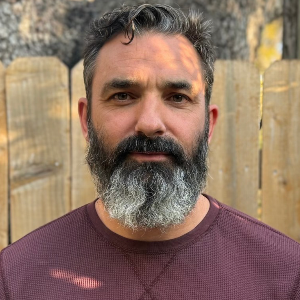
My name is Conor McMillen. I'm an IFS-trained life coach — trained by the IFS Institute in 2014 — and I grant two independent credentials myself through my own programs, so I have a stake in how this question gets answered. I'd rather tell you that now than let you find it at the bottom. (I am not affiliated with or endorsed by the IFS Institute, and nothing I offer is IFS Institute certification.)
Every credential has a granter
Here's the single most useful thing I can tell you about any certification, in IFS or anywhere else: a credential is a claim made by whoever granted it. "Certified" is never a free-floating fact — it's shorthand for "this organization vouches for this person by its own standard." So the first question to ask of any IFS credential is simply: who granted this, and what did earning it require?
Everything below is that question, applied to the real credentials in the IFS world as of late 2026.
IFS Institute certification: the official credential
The IFS Institute — the home of the model, founded by Dr. Richard Schwartz — grants the credential most people mean when they say "IFS certified." It's earned through the Institute's own training ladder, and the entry point is Level 1: a training currently limited to licensed mental-health professionals, entered through a general application, with a 12 to 18 month wait between approval and an invitation to register, by the Institute's own estimate. I've written about what that wait looks like and what to do with it, and the full comparison of every training path covers the landscape around it.
Two things follow from that structure. First, the official credential is real and meaningful — it sits on top of the Institute's own trainings, and I'd never suggest otherwise. Second, it is currently out of reach for anyone without a clinical license, at any price. If someone without a license tells you they hold IFS Institute certification, something in that claim deserves a closer look.
"IFS-informed": the Institute's other designation
The Institute also has a vocabulary for everyone learning the model outside the certification ladder: "IFS-informed." It describes practitioners who've engaged the Institute's open education — courses, workshops, the annual conference, all of which are open to anyone. It claims exposure to the model from the source, without claiming the practitioner credential. IFSCA, the best-known independent training organization, uses "IFS Informed" for its graduates in the same spirit.
In my mind this is a genuinely useful term, because it does what a good credential term should do: it tells you exactly how much to infer, and no more.
Independent credentials: read the name
Outside the Institute, training programs grant their own credentials — and the trustworthy ones are named so that the granter is visible in the credential itself. IFSCA grants its own certificate. My programs grant two: graduates of the Self-Led Coaching Academy are certified as Certified Self-Led Coaches, and graduates of the IFS Education Intensive's live practitioner track are certified as Certified Self-Led Practitioners. Neither is IFS Institute certification, and I say so everywhere the credentials appear — the name on the certificate tells you who stands behind it, which is exactly how it should work.
So when you meet any credential in the wild, run the granter test: Who granted it? What did earning it require — hours, practice, feedback, or just a purchase? And does the holder represent it accurately? A practitioner who answers those three questions plainly is telling you something about how they'll treat everything else, too.
The question under the question
Most people asking "what does IFS certification mean" are really asking something more practical: will this person — or will I, after this program — actually be good at the work? And there I'd offer the distinction I use for every training decision: the credential question and the competence question are different questions.
Competence in IFS comes from a specific set of things: your own practice with the model (you cannot lead someone else's system from a part — the calm, curious, and compassionate presence this work requires is built in your own system first), structured learning, real practice with feedback, and time. Credentials can testify to those things. They cannot substitute for them. I've met deeply skilled practitioners with modest credentials and I've seen impressive certificates hanging over shallow skill. Get the competence; represent it accurately. That combination is worth more to the people you serve than any letters after a name.
The certification path that's open now
If you're a licensed clinician set on the official credential, the path is the Institute's: Level 1 through the general application and the wait list that follows it, and use the waiting years well. That path is real and nothing here competes with it.
If you're a coach, counselor, or helping professional — or a clinician who wants an applied credential while the Level 1 wait list does its thing — the path I built is the Self-Led Coaching Academy: three months online, the parts framework applied to action-based coaching, the scope ethics that make the work trustworthy, and three optional one-on-one calls with me along the way. Graduates are certified as Certified Self-Led Coaches — my credential, granted by my standard, and represented exactly that way. There's a free preview with the actual opening modules, so you can judge the teaching before any money moves. And for the deeper territory — exiles, polarizations, the full protocol — the IFS Education Intensive is the education the certification sits on.
Common questions
Is there official IFS certification for coaches?
Not currently. IFS Institute certification requires the Institute's trainings, which require a clinical license to enter. Programs for coaches — mine included — grant their own credentials, and any program implying it can sell coaches the Institute's credential deserves your skepticism.
Can you get IFS certified online?
The Institute's certification runs through its own training ladder. Independent programs legitimately offer their own online credentials — the test is whether the credential's name and marketing make the granter plain. If "certified" appears without a visible granter, keep asking questions.
How much does IFS certification cost?
The Institute's path starts with Level 1 tuition — $4,200 for US online cohorts starting in 2027, once your invitation arrives, and continues through further trainings. Independent credentials run a fraction of that. The full cost breakdown covers every path with 2026 numbers.
Do I need certification to use IFS at all?
No. The model is published and anyone can learn it — for their own healing, no credential is involved at all. For working with others, what you need depends on scope: licensed clinicians bring IFS into therapy; coaches use the parts lens within coaching scope. I've written about where the legal line sits between them, and the coach's full guide covers the unlicensed path in detail.
What should I ask before paying for any IFS credential?
Three things: who grants it, what earning it requires, and what its holders are told they can claim. A program that answers all three before you ask is the kind worth considering.
If you take one thing from this page: "certified" is the beginning of a question, and the question is always about the granter. Read the name on the credential, ask what it required, and weigh the competence underneath it. That habit will serve you whether you're choosing a training or choosing a practitioner.
All the best,
Conor McMillen
I am not affiliated with or endorsed by the IFS Institute. "IFS" and "Internal Family Systems" refer to the therapeutic model developed by Dr. Richard Schwartz. Certification structures, admissions policies, and costs described above reflect published information as of late 2026 and change over time — verify current details with each organization. This page is educational and is not legal or clinical advice.
Take this work deeper
A 30-day Self-Led IFS practice you live with for months
The Complete Self-Led IFS Program — videos, audio, written exercises, guided meditations, and a 274-page companion workbook. Two aims, learned one day at a time: feel your feelings more deeply, and build the calm, curious, compassionate Self energy that leads your parts. $249, or 3 monthly payments of $99. Yours forever.
Get the free guided IFS meditation
If you'd like to experience IFS for yourself rather than just read about it, my free guided meditation is a gentle place to start — dropping in and meeting your parts with calm, curiosity, and compassion. Sign up below and it's yours.
I'll never share your information, and you can unsubscribe anytime.
We don't like SPAM either. We will never sell your information, for any reason.
Author