How to Get Trained in IFS as a Coach (Now That Level 1 Is Therapists-Only)
Jul 10, 2026
If you're a coach who wants to work with Internal Family Systems, you've probably already discovered the problem: everyone points you to the IFS Institute's Level 1 training — and the door is closed. Admission is now limited to licensed mental-health professionals, entry runs through a lottery, and even eligible clinicians often wait years for a seat.
So what do you actually do?
Updated September 2026: the Institute has since launched two programs built for coaches. Both are covered in the options below.
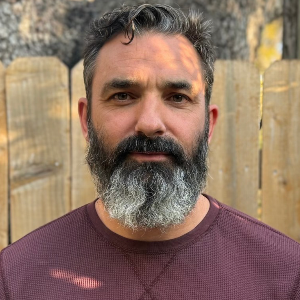
My name is Conor McMillen. I'm an IFS-trained life coach — I was trained by the IFS Institute back in 2014, and today I teach IFS to individuals and to practitioners, including through an academy built specifically for coaches. That means I have a horse in this race, and I'd rather tell you that in the first paragraph than let you discover it in the last one. What follows is the honest version of your options — including the ones that don't involve me. (One more honesty note up front: I am not affiliated with or endorsed by the IFS Institute, and nothing I offer is IFS Institute certification.)
The official path — and why it's closed to coaches
Let's start by giving the IFS Institute its due, because it's earned it. The Institute is the home of the model. Its trainings are excellent, its trainers are deeply experienced, and if you are a licensed therapist who can get a seat, Level 1 is a beautiful education. I went through it, and it changed the direction of my life. I remain genuinely grateful to Richard Schwartz and the Institute for what they built.
And — here is the current reality, from the Institute's own admissions pages:
- Level 1 admission in North America is limited to people already credentialed to work in a mental-health profession — practically speaking, a master's or doctorate in a mental-health field plus authorization to provide mental-health services. Outside the U.S., applicants must be registered mental-health professionals with a regulatory authority.
- Entry runs through a randomized lottery. Demand is so high that you don't simply apply — you enter a drawing for the chance to apply, with a non-refundable application fee, and submitting an application guarantees nothing.
- Even for eligible clinicians, the effective wait is often years. For a working coach, it isn't a wait at all — it's a wall. If you're a licensed therapist in that line rather than a coach, I've written a separate plan for the waiting years.
When I trained in 2014, none of that was true yet. I was the only non-licensed person in my cohort, and admission was simply an invoice you could pay. That door no longer exists. I want to be precise about this because I've seen it stated too loosely in both directions: the Institute has not banned coaches from IFS — anyone can study the model — but its flagship practitioner training is, as of now, genuinely unavailable to you if you aren't a licensed clinician.
First, the boundary that matters more than any training
Before we talk about options, let's talk about scope — because in my mind this matters more than which program you choose.
A coach is not a therapist. To call yourself a therapist you have to have a license; that's a legal line, not a matter of skill or heart. Only therapists diagnose and treat mental illness and work clinically with severe trauma. What a coach can do — ethically and legitimately — is use an IFS lens in coaching: helping generally-stable clients understand their parts, unblend, access self-energy, and move toward their goals with more self-leadership. Both lanes are valuable. Only therapy is the right lane for some clients, and part of being a trustworthy IFS-informed coach is knowing when to refer out.
If that boundary feels limiting, I'd gently offer the opposite view: it's what makes coaching with IFS honest, and honest is what makes it work. I've written more about exactly where that line sits here: Is It Legal to Coach with IFS Without a Therapy License?
Your real options as a coach
Here's the full menu as I see it — including the paths that don't lead to me.
Option 1 — The Institute's own offerings for coaches: open courses, plus two new programs
The Institute itself offers plenty that is open to coaches: online courses, workshops, and its annual conference. In the Institute's own vocabulary, this level of education lets you describe yourself as "IFS-informed." The material is solid and it comes from the source. These are learning experiences rather than practitioner formation, though: a self-paced course or weekend workshop isn't designed to build the applied, with-clients skill set, and there's no structured practice container around it.
In 2026 the Institute added two programs built specifically for coaches, and I want you to have the current picture.
The Self-Led Coach is a six-week live introduction: $425, about twelve hours over Zoom, with ICF continuing-education credits. The Institute's own description is that it's for learning and personal insight, and that it does not provide certification or prepare participants to use IFS with clients.
IFS Foundations for Coaches is the deeper program it feeds into: $2,250, roughly 37 live hours plus practice groups, capped at 60 participants per cohort. This one does teach applied IFS coaching. Admission requires at least one year of coaching experience and training or certification through an accredited coaching body, and its certificate of completion states plainly that it is not IFS certification.
I think this is good news. The Institute building for coaches says the model belongs in coaching, and the teaching will come from the source. If you have the credentials, the budget, and the patience for a cohort seat, Foundations is a real option, and these paths stack with everything else on this list.
Here's what to weigh. The full ladder runs $2,675 and moves on the Institute's schedule, with an interest list and a 60-seat cap. The application gate matters too: if you're newer than a year into coaching, or your training didn't come through an accredited body, the deeper program isn't open to you yet. The intro course on its own, by the Institute's own framing, won't equip you to bring parts work into client sessions. One more thing worth knowing, because the naming can get confusing: their introductory course, "The Self-Led Coach," is not connected to my Self-Led Coaching Academy, which has been running since mid-2024.
Option 2 — Books and self-study
The IFS literature is rich, and you can go a real distance with it — I did, in my first year. It's the cheapest path and I'd encourage it no matter what else you choose. Its limits are the obvious ones: no feedback, no structure, no practice, and no way to know what you're misunderstanding. Books tell you what IFS is. They can't watch you use it.
Option 3 — Become a licensed therapist
I include this seriously, not as a joke: if what you actually want is to do deep clinical trauma work with IFS, the honest path is a master's degree, licensure, and then the Institute's lottery. That's a five-to-eight-year road. For some people reading this, it's the right one. If your calling is clinical, don't let anyone — including me — sell you a shortcut to it.
Option 4 — Structured IFS education built for coaches
This is the gap I built the Self-Led Coaching Academy (SLCA) to fill: a three-month online program teaching coaches, therapists, and helping professionals how to bring IFS into action-based coaching — the parts framework, unblending, working with protectors, and the coaching-scope ethics we just talked about, taught by someone who went through the Institute's training and has practiced IFS daily since 2014.
SLCA teaches two things side by side: the IFS model itself, and the action-based coaching methods that pair with it. Coaching is change work. Your clients come to you because they want something in their life to move, and a parts framework on its own doesn't get them there. So the program covers the internal work, unblending, befriending protectors, building self-leadership in a client, and it also covers how to connect that internal work to external change: goals, action steps, accountability, and the moments where a client's parts and their plans collide. In my mind, that pairing is the job of an IFS coach.
And here is the certification honesty, stated as plainly as I can: SLCA is not IFS Institute certification, and no program for coaches is. Institute certification requires the Institute's own trainings, which — as covered above — currently require a clinical license. Anyone selling coaches "IFS certification" deserves your skepticism. What SLCA gives you is education and a practice container: you graduate as a trained Self-Led Coach, with the skills to use an IFS lens in your coaching and the honesty to represent yourself accurately. In my opinion, that combination — real skill plus accurate representation — is worth more to your practice than any certificate on the wall.
Option 5 — The deep education, on demand
New this year, and mine as well: the IFS Education Intensive — On-Demand — the training that practices and clinical teams hire me to teach over 14 live hours, distilled to the education itself: about six hours of focused teaching across 86 short lessons, plus two guided practice audios and the full Becoming Self-Led workbook, with lifetime access. It goes deeper into the protocol than anything else open to coaches — the Six Fs, polarizations, full exile work — and it pairs naturally with SLCA: the Academy gives you the coaching framework and the credential path; the intensive gives you the depth underneath it. It's $499, there's a free preview, and for six months the full $499 counts as credit toward the Everything bundle (both programs together for $799). And like everything on this page that comes from me: it's education, not IFS Institute certification.
How to choose
Here's my honest sorting, in the two-lane style I use for everything:
If you need the official credential — because your work is clinical, your clients carry severe trauma, or the letters genuinely matter in your context — then the path is licensure plus the Institute's lottery, and options 1 and 2 are how you stay close to the model in the meantime. That's the long road, and for some of you it's the right one.
If you're a coach who wants to use IFS well, ethically, and soon — start with the books, take what the Institute offers openly, and if you want structure, feedback, and a with-clients skill set, that's what a program built for coaches is for. You don't have to guess whether mine fits: the free preview is the exact experience a paying student gets on day one — the actual opening modules, not a highlight reel. Go through it, then decide. And if you'd rather talk it through first, request a fit call — I read every one personally, and I'll tell you honestly if I don't think SLCA is your best next step.
Common questions
Can a coach get IFS certified?
Not through the IFS Institute — certification requires their trainings, which currently require a mental-health license. Even the Institute's new Foundations for Coaches program grants a certificate of completion that, in the Institute's own words, is not IFS certification. Treat any program offering coaches "IFS certification" with real caution. What's legitimately available to you is IFS education plus a program's own credential, named for what it is: the Institute's "IFS-informed" designation, IFSCA's certificate, or SLCA's Certified Self-Led Coach.
Is the Self-Led Coaching Academy affiliated with the IFS Institute?
No. I was trained by the IFS Institute in 2014 and I'm grateful for that education, but SLCA is my own independent program — not affiliated with, endorsed by, or certified by the IFS Institute.
Can I use IFS with coaching clients without a license?
You can use an IFS lens within coaching scope: parts language, unblending, self-leadership work with generally-stable clients pursuing growth. You cannot diagnose, treat mental illness, or market yourself as a therapist. Scope honesty isn't just legal cover — it's what makes the work trustworthy.
Should I learn IFS on myself first?
Yes — full stop. IFS is the rare modality where your own practice IS practitioner development: you cannot lead a client's system from a part. If you haven't done your own work with the model yet, start with the complete guide to self-led IFS — it's written for your own healing, and it will make you a better practitioner than any credential will.
What does SLCA cost and how long does it take?
Three months, online, $899 (and the preview is free — you'll know if it's right before you pay anything). Compare that honestly to the alternative: for eligible clinicians, Institute training runs thousands of dollars after a lottery and a wait; for coaches, the Institute's path is now a $425 intro plus a $2,250 program with an application gate and a cohort calendar.
What’s the IFS Education Intensive — On-Demand?
The education from the 14-hour training I teach live to practices and clinical teams, distilled to about six hours of focused teaching you can move through at your own pace — $499, with a free preview. It doesn’t certify you (nothing on demand should claim to); it’s the depth that sits underneath the coaching frame, and it pairs with SLCA. The full details are here.
If you take one thing from this page, take this: the closed door at the Institute doesn't mean IFS is closed to you. The model is bigger than any one training path, your own system is the first classroom, and there are honest ways forward from exactly where you stand. Never go faster than the slowest part — including on career decisions.
Two more reads if you are weighing paths: I compared all the major IFS training options side by side, and I broke down who grants IFS certification and what each credential requires.
All the best,
Conor McMillen
I am not affiliated with or endorsed by the IFS Institute. "IFS" and "Internal Family Systems" refer to the therapeutic model developed by Dr. Richard Schwartz; admissions and program details above reflect the Institute's published policies and pages as of September 2026 — verify current requirements at ifs-institute.com. This page is educational and is not legal or clinical advice.
Take this work deeper
A 30-day Self-Led IFS practice you live with for months
The Complete Self-Led IFS Program — videos, audio, written exercises, guided meditations, and a 274-page companion workbook. Two aims, learned one day at a time: feel your feelings more deeply, and build the calm, curious, compassionate Self energy that leads your parts. $249, or 3 monthly payments of $99. Yours forever.
Get the free guided IFS meditation
If you'd like to experience IFS for yourself rather than just read about it, my free guided meditation is a gentle place to start — dropping in and meeting your parts with calm, curiosity, and compassion. Sign up below and it's yours.
I'll never share your information, and you can unsubscribe anytime.
We don't like SPAM either. We will never sell your information, for any reason.
Author